

BOOK INTERVIEW AGENCY about THE KULAK (ADEVERINȚĂ DE CHIABUR)
1. You have studied music and medicine. You were an instrumentalist – electronic organ, toolmaker and also a general surgery doctor. You are passionate about literature, theater, film, visual arts and the art of watchmaking, and photographic art as well. What do all these have in common, apart from the name Adrian Herescu?
In order to be able to answer this question pertinently, I should be the late Dan Hăulică or Professor Silviu Angelescu.
I dare to say, however, that each of the areas listed, borrows something from one of them – at least, among the others, having a common general term, the craft. The skills, the concentration, the discipline, the memory, the instinct, having a curious mind, leaning towards perfectionism, are qualities necessary to practice or understand any of them.
2. What can you tell us about your contact with the craft of watchmaking? In the last chapter of the book you talk about "Shepherds and Craftsmen", a topic that was also the occasion of a recent exhibition. (2) And what role did the photographer Răzvan Voiculescu play in your decision to start the project "Kulak Certificate"? In the foreword of the book, you mentioned that many friends were skeptical about this project.
In 2008 I asked the photographer artist Răzvan Voiculescu to make an album about Lăpușului County, to honor the memory of my father, Vasile, born in this region in the village of Costeni.
The project that lasted over 2 years, revealed to me and also made me aware of the cultural evolution of the Herescu Family, since the departure of the 14-year-old child, Vasile, as they say "into the world", to achieve more than it would have been possible in his native village, and his descendants, who also left their birthplaces for the same reason.
This is how the second photographic album has arisen: "Destinies of Dazzling Resemblance", which presents in images the history of the Herescu Family, starting with the year 1780, in Lăpușului County, with shepherd ancestors and wood carving craftsmen, occupation that they used to practice during the unfriendly winters, and to this day, without stopping here.
Acquainted since I was a child with the art of watchmaking as "Beauty", through the gifts that I have received from my parents on the occasion of various important events in my life, I later found out that the first Swiss watchmakers were shepherds.
During the long sunny winters, these shepherds had the chance to have their services requested by the Huguenot jewelers – refugees from the persecution of French Catholics who turned into watchmakers due to Calvinist customs that forbade luxury, in order to make small pieces that made up the mechanisms of the watches they were producing. Meticulous, disciplined and inventive, the shepherds quickly learned the craft, soon surpassing their masters, becoming watchmakers themselves, creating the Myth of the Swiss Watchmaking, which together with the Chocolate and the Pharma and Medical Equipment Industry created the Swiss Brand.
The shepherds from Lăpușului Country did not have the same chance, remaining confined to the craft of wood carving; creating architectural jewels, some of which have become UNESCO World Heritage Sites, such as the Wooden Church of Rogoz, they are not second to the Swiss Watchmaker Myth, from a cultural point of view.
This is how the third album came to light: "The12th Art", a brief history, in images, of the watchmaking craft, accompanied by a collection of photographic collages of this craft, presented in the form of album spreads and paintings on methacrylate and dibond support in the exhibition organized on the occasion of the launch of the albums.
The connection of the two "worlds" of shepherds, with their crafts, is given by the Wooden Church of Chêne-Bourg Geneva – the Swiss Watchmaking boutique, built by craftsmen, descendants of the shepherds from Lăpușului Country.
Although it is said that a picture is worth a thousand words, I felt that something was missing from the Photographic Project, which would help those around me to understand my cultural approach – to which they expressed reservations about the ability to carry it out, given its complexity, the essence of which they were not able to grasp. The project "Kulak Certificate" came to light in this context, where the central character of the memoirs – Vasile, is a kulak, giving the book its title (its choice being the exclusive merit of the publisher).
And so, from an addendum to the photographic art albums, Kulak Certificate turned into an independent project, the albums becoming themselves an appendix to the volume of Memoirs.
3. The saga of the Herescu family goes through such contrasting places and times. What is left today of the world you evoke?
Specifically, nothing. On a cognitive level, its Memory. Which is important, because if you have Memory, it means that you have History, which must be known by the generations after 1989, equidistantly, without biases and petty revenge. Without a Memory, you have no Future.
4. Although you do not claim that the volume published at Tracus Arte is a literary work, the way it is written captivates the reader. How did you acquire the talent to tell a story? Is it due to reading, life experience or is it inherited?
Recently, my 18-year-old daughter, native in English and Spanish, received an award for essays written during her high school years. On the occasion of handing over the award, her English and literature teacher, who was her tutor, gave an emotional speech on the literary qualities of Ana's writing.
Asking the teacher to send us a digital copy of the speech, Ana motivating this that in the second volume of Memoirs, her father wants to introduce a chapter with her writings, including the speech, as he did in the first volume with Vlad, her brother, the teacher exclaimed: "- Ah, so that's where your talent comes from!!". Unperturbed, Ana replied: – "in our family, only Vlad is the real writer (he published 2 fiction novels in English, translated into Romanian through Tracus Arte Publishing House, and published in a single volume under the title Yesterday's Players. Motorcyclists in the Moonlight), so eventually our father inherits it from the two of us!!!".
I would add that Vasile, my father, wrote all my compositions I had to do in school, up to the seventh or eighth grade, when I woke up participating in the National Literature Olympiad, and with the short story "Memories from the future", this time written by me as a result of many science fiction books I read, I won the second prize. In high school I did not touch the Romanian language textbooks, as I was living in the select intellectual entourage of the families of my schoolmates, having access through them to all the international literature.
When, after more than 30 years, I met Professor Silviu Angelescu again, and I told him for an hour and a half, about small events in my life, which took place during the time we did not see each other, he exclaimed: – "a lot of epic in your stories", to which I replied: – "can it be written?", and he continued: -"if you write as well as you tell a story, yes!!".
"Kulak Certificate" came to light, in the context in which the project with the Art of the Craft was in progress and I felt that something was missing.
Professor Angelescu supported me in my endeavor, asking him at one point if there was a school for writers, in order to improve my writing. As the answer was: – "no!", I resigned myself that it will be difficult for me to overcome what I have achieved with Kulak Certificate, which is due to the readings, life experience and a drop of talent inherited from my father, self-taught professional in everything, with the Bible as the headline reading.
5. Do you think that the writing of memoirs, literature will survive, and the future holds a better world ahead of us? Or will the arts become just a whim of the times that appear to be more and more superficial?
Literature will survive only through the education of young generations, who are to be inspired to read as a way of education and understanding of what is happening around them, even on the computer monitor.
As for the writing of memoirs, it will gain major interest, after so much contamination with morbid fiction, propagated and promoted through media channels, cinema and contemporary theater. We are living superficial times for more than 30 years, with the disappearance of the value criteria, by promoting populism and globalized stupidity that reigns (on) social networks.
After the pandemic that arose during this deep crisis of human values, as after any other war – memory can immediately remind us that arts will be revitalized and will become spiritual food again.
I am optimistic about a better future, and we are also shrugging our shoulders by resuming – as we did during the communism, (a) resistance through reading, doubled by the development of a resistance through culture, at the forefront of which we have the elites, who have so far, unforgivably gave too many steps back; I don't want to lack elegancy and say that they gave up.


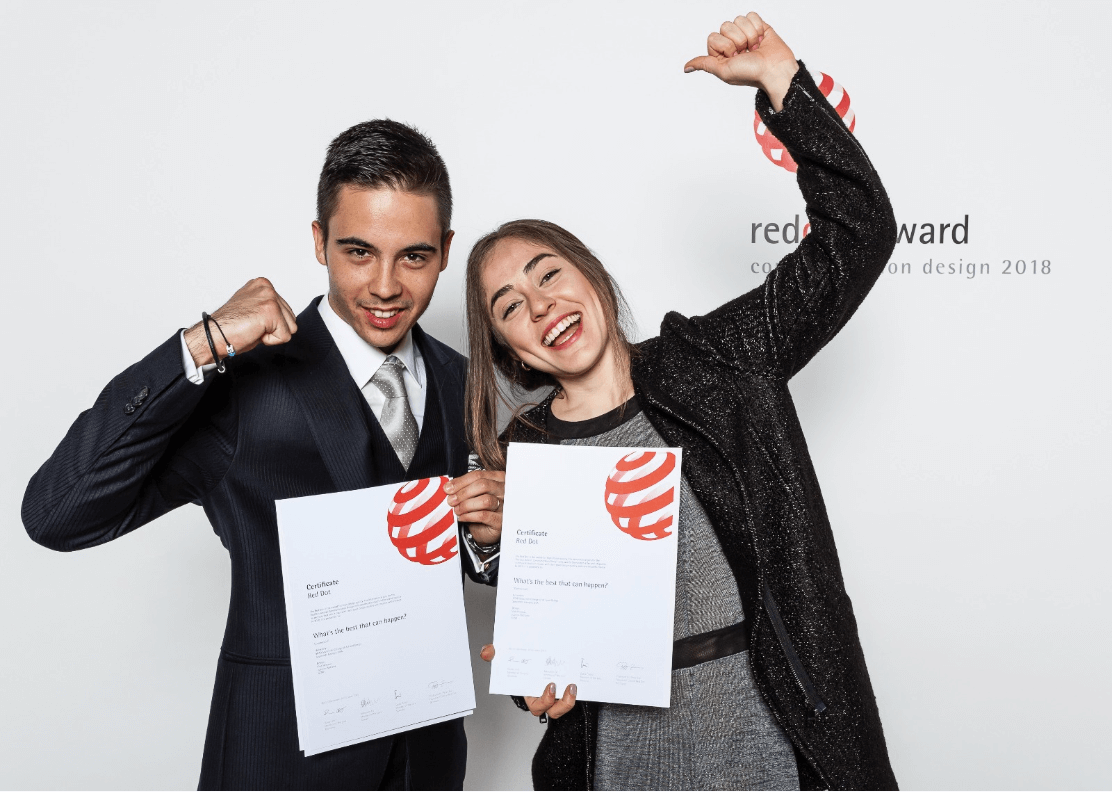
RED DOT AWARD



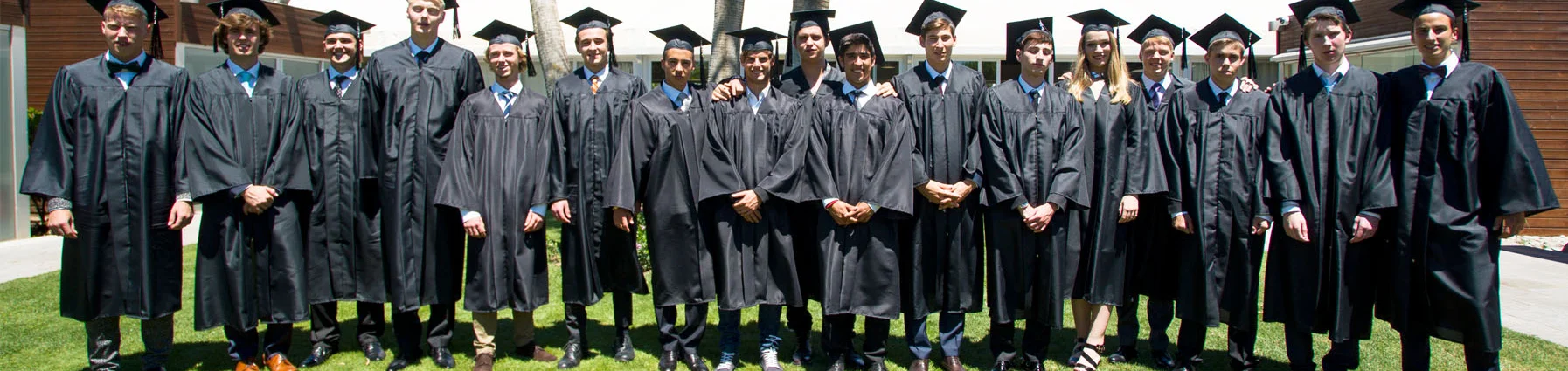
AMERICAN SCHOOL – GRADUATION

CONTACT
You can write us a message using the form or you can send a email and we'll get back to you as soon as possible. Thank you!
contact@herescu.com
2022 © All Rights Reserved – The Herescu Family